


Curious how a stone from ancient riverbeds became a global icon? You’re in the right place! I’ll guide you through the spark and the story with clear, upbeat notes you can use today!
From India’s streams to royal courts, the journey is wild and inspiring! The april birthstone rose in fame long ago and swept across the world by the 1400s. By the 1800s new sources changed the trade forever.
We’ll break down quick facts, the history, and the meaning that keeps people drawn to these gemstones. You’ll get practical tips for shopping and wearing jewelry with intent. Expect lively, useful info you can use right now!
Key Takeaways
- Origins matter: These gems began in riverbeds and reached Europe by the 1400s.
- Enduring appeal: Their meaning still fuels style and confidence today.
- Smart shopping: Know a few facts and you’ll spot quality with ease.
- Timeless story: From ancient trade to modern jewelry, the tale is rich.
- Wear with intent: Choose pieces that reflect your goals and vibe!
Why the April Birthstone Matters Today: Meaning, Symbolism, and Everyday Shine
More than sparkle, this gem has been a daily reminder of strength, devotion, and good fortune for centuries! You’ll find its energy woven into ceremonies, gifts, and small daily rituals. People wear it to feel braver and more connected to the people they love.
Strength: Cultures called it invincible. The Greek root adámas means unconquerable, and that idea still inspires wearers today. If you’re born april, wearing this stone can be a simple, powerful reminder to stand tall!
Love
It’s the go-to for proposals and big milestones. The modern engagement ring made gems a global symbol of lifelong commitment. Couples also mark 60th and 75th anniversaries with it—tiny sparks that say, “We lasted the years.”
Protection and prosperity
Folklore linked this stone to shielding energy. Historic beliefs said it could ward off poison or the evil eye. Today, many wear it as an intention piece for protection, inspiration, and small boosts of confidence.
- Wear one for a daily confidence boost!
- Choose a pendant or studs to keep protection close.
- Pair a gem with a short mantra to focus what you want to grow.
Diamond Birthstone Origins: A Journey from Ancient Rivers to Modern Romance
Let’s trace how small stones from India grew into symbols of love and power across Europe and beyond. I love this story—it shows how trade, taste, and big discoveries shaped what we wear today!
Ancient India: river picks and early trade
These gems were first gathered from rivers and streams in India by the 4th century BCE. Caravans carried rough stones to Venice, where medieval markets made them prized by elites.
Europe and Brazil
In 1477 an engagement ring in Austria helped seal their romantic image. As Indian supplies dropped, Brazil rose in the 1700s after finds in Minas Gerais, widening access for collectors and jewelers.
South Africa, De Beers, and famous names
The Kimberley finds of the late 1860s changed everything. De Beers formed in 1888 and by 1900 controlled roughly 90% of rough production. Two legendary gems— the Hope Diamond (45.52 carats) and the Cullinan discovery (3,106 carats) that produced the 530-carat Cullinan I—still spark imaginations.
- Origin note: River gravels to royal treasuries!
- Color and name: Famous stones shaped taste and lore.
| Era | Key Region | Impact |
|---|---|---|
| Ancient–1400s | India | River mining; trade to Venice |
| 1700s–1800s | Brazil | New supply from Minas Gerais |
| Late 1800s–1900s | South Africa | Industrial-scale mining; De Beers dominance |
Geology 101: How Diamonds Form, Why They’re the Hardest, and What They’re Made Of
Deep inside Earth, pure carbon meets extreme heat and pressure. At roughly 100 miles down, atoms bond into a rigid lattice. That lattice is what gives this stone its famed strength!
Volcanic eruptions then shove crystals toward the surface. Kimberlite and lamproite pipes act like nature’s delivery tubes. That’s how precious pieces reach mines and markets.
Hardness, toughness, and the Mohs scale
The mineral rates a 10 on the Mohs scale of hardness. That rank explains why daily wear is possible for many rings and studs!
But hardness isn’t the same as toughness. Hardness resists scratching; toughness resists breaking. Treat your jewelry with care even if the surface looks invincible.
Types and trace elements
Not all are the same. Type Ia stones contain nitrogen and tend to be common. Type IIb contain boron and can appear blue. These tiny elements change color and personality.
- Quick tip: Ask about formation and type when you shop to match style with lifestyle!
- Store pieces separately to protect their surface and keep brilliance alive.
The 4Cs of Diamond Quality: Color, Cut, Clarity, and Carat
Want to get confident choosing a ring? Start with the four key quality traits every buyer uses! These four factors work together to shape how a gem looks, costs, and wears.

Color: D–Z and fancy hues
Color runs from D (colorless) to Z (light yellow or brown) on the standard grading scale. Natural fancy colors—pink, blue, green, and especially red—are far rarer and push price up fast.
Cut: the sparkle engine
Cut controls brilliance, fire, and scintillation. A well-cut stone flashes light from across the room! Round brilliant is the most popular shape, but oval, cushion, and emerald each have unique charm.
Clarity: inclusions and grading
Clarity ranges from Flawless/IF down to I3, based on inclusions and blemishes. Most buyers choose VS or SI for great value—focus on what looks eye-clean to you.
Carat: weight and smart sizing
Carat measures weight: 1 carat = 0.2 grams. Prices jump at key marks (1.00 ct vs 0.90 ct), so choose a cut and carat combo that gives strong presence without overspending.
| Aspect | What it means | Shopping tip |
|---|---|---|
| Color (D–Z) | How white or fancy the stone appears | Pick D–G for bright white; choose fancy colors if rarity appeals |
| Cut | How light is returned (brilliance, fire, scintillation) | Prioritize Excellent/Very Good cuts for everyday rings |
| Clarity | Visible inclusions and microscopic blemishes | Aim for eye-clean SI/VS grades to save money |
| Carat | Weight; affects price more than perceived size | Consider face-up spread and cut to maximize look |
- Pro tip: Ask for a GIA or similar lab report for full transparency!
- Balance cut first, then optimize color, clarity, and carat for the look you love!
Color, Character, and Cut Style: From Classic White to Fancy Hues and Antique Charm
A gem’s quirks—tiny chemistry and old-world cuts—shape how it shows up on your hand! Trace elements and lattice defects create striking hues like pink, blue, and yellow. Some tones are natural; others get treated or irradiated to boost color.
Fancy colors explained: Pink is rare. Blue often links to boron. Yellow and brown are more common. Black results from dense inclusions. Salt-and-pepper mixes light and dark for a moody, modern look. Red is the rarest and most coveted!
Beyond brilliant: alternative cuts and vintage charm
Rose cuts, polki, slices, and antique cuts offer bigger face-up surface and unique personality. These styles make a smaller carat feel larger and bring old-world glow to modern settings.
- Crave color? Try pink, blue, yellow, black, salt-and-pepper, or rare red to express mood and story!
- Love character? Salt-and-pepper and black stones add bold, contemporary energy.
- Prefer subtle? Classic white with an excellent cut stays timeless for rings and daily wear.
- Want more presence? Rose cuts, polki, and slices give a larger surface for the carat—smart and stunning.
| Choice | Why it matters | Good for |
|---|---|---|
| Fancy colors | Trace elements or defects create unique hues | Statement rings and colored center gems |
| Salt-and-pepper / Black | Mixed or dense inclusions add texture | Modern, edgy styles |
| Antique & alternative cuts | More face-up surface; soft light return | Vintage looks and larger appearance on a budget |
Where Diamonds Come From: Global Sources and the Modern Supply Chain
Trace the journey from mine to market and learn which regions shape availability and price right now! I’ll map the top producers so you can shop with confidence and clarity.

Africa today: Botswana, DRC, and South Africa
Africa supplies much of the rough material the market relies on. Botswana, the Democratic Republic of the Congo, and south africa are major names you’ll see on certificates and reports.
Russia’s volume and value on the world stage
Russia ranks high by both volume and value. That footprint affects global prices and availability, so geopolitical shifts can ripple through the market.
Australia and Canada: Argyle and northern discoveries
Australia’s Argyle mine (opened 1983) and Canada’s northern finds from the 1990s brought new color options and reliability to supply chains.
Botswana as a sorting and valuation hub
Botswana isn’t just a producer—it’s a sorting center. Roughly 40 percent of the world’s rough is handled there, where stones get graded and valued before export.
- Quick take: Ask the seller the country of origin and chain-of-custody by name to buy with transparency!
- Use this map to match your values and your budget today!
Ethical Sourcing and Modern Choices: Conflict-Free, Kimberley Process, and Lab-Grown
Ethics and sparkle can coexist—let’s explore how to choose gems with a clear conscience. You deserve jewelry that reflects your values and looks stunning every day!
Conflict diamonds are mined and sold to fund armed conflicts. The Kimberley Process (est. 2003) aims to certify rough as conflict-free, but it has limits. It does not fully address wider environmental or labor concerns, so ask beyond the certificate.
Lab-grown options and impact
Lab-grown stones share the same physical and chemical properties as natural ones. They also often come with lower emissions. A 2020 Stanford comparison found synthetic production had about 5.5 times lower emissions than the cleanest mines reported.
For values-driven shoppers: lab-grown offers transparency and a smaller footprint when paired with responsible makers!
Treatments, care, and smart shopping
Common treatments include laser drilling, fracture filling, and irradiation to boost color or apparent clarity. Know them so you can ask clear questions about quality and longevity.
- Get real about “conflict-free”—ask about labor, environment, and traceability for true protection of people and planet!
- Use warm water, mild soap, and a soft brush weekly; professional ultrasonic or steam cleanings are usually fine for well-set pieces.
- Check reports, warranties, and return windows before you buy birthstone jewelry to protect your investment and peace of mind!
| Choice | What to ask | Why it matters |
|---|---|---|
| Natural stones | Country of origin; chain-of-custody; certifications | Tracks labor and environmental practices |
| Lab-grown | Production method; emissions or energy sources | Lower footprint; clear provenance |
| Treated gems | Type of treatment; permanence; disclosure | Affects clarity, color, and long-term care |
Beyond Jewelry: Diamonds in Industry, Science, and Technology
Most of these stones by weight never see a setting; they fuel industry instead! Roughly 80 percent of supply goes to cutting, drilling, and research, not to jewelry. That’s a striking fact you can use when you shop or chat about gems!
Industrial uses: abrasives, optics, and heat management
Hardness and high thermal conductivity make this carbon form perfect for tough jobs. Tools with diamond edges cut and grind with far less wear.
They also serve as optical windows in lasers and spectroscopy. Thin layers help manage heat at the surface of electronics and protect sensitive components!
Research frontiers: extreme pressures and quantum tech
Diamond anvil cells recreate pressures like those deep inside Earth. Scientists use tiny samples to study new materials and planetary cores!
Defects called nitrogen-vacancy centers are tiny holes that do huge things. They enable quantum sensing and may become qubits for future quantum computers.
“Most of what the market mines goes to tools and labs—this material is truly an industrial hero.”
- Surprising fact: Most diamonds used by weight don’t go into jewelry—they power industry and innovation!
- Abrasive tools, optical windows, and thermal layers rely on unique surface and heat properties.
- Diamond anvil cells simulate extreme pressures for key scientific breakthroughs.
- Nitrogen-vacancy centers unlock advanced sensing and quantum possibilities.
| Use | Why it matters | Typical benefit |
|---|---|---|
| Abrasives & cutting | Extreme hardness and wear resistance | Faster cutting, longer tool life |
| Optics | Low absorption and high durability | Clear laser windows and rugged lenses |
| Thermal management | High thermal conductivity | Heat spreaders for chips and power devices |
| Scientific research | High-pressure experiments | Discoveries about planetary cores and new materials |
| Quantum tech | Nitrogen-vacancy centers enable sensing | Ultra-sensitive magnetometers and qubit research |
Smart Alternatives and Gift Ideas for April Birthdays
Looking for bright, budget-friendly options that still feel special for an April birthday? I’ve got energetic picks that honor tradition and spark new style choices!
Historic and modern lists sometimes paired sapphire or opal with April, while white topaz and clear quartz appear as modern, wallet-friendly options. Each brings a different mood and story.
Alternatives that shine
White sapphire, natural zircon, spinel, aquamarine, and clear quartz all offer great sparkle and strong wear for daily jewelry. They make lovely stand-ins when you want impact without the same price tag.
Gift ideas that hit the mark
Choose studs for everyday ease, a ring for a statement, or a pendant for something close to the heart! Cufflinks, watches, tennis bracelets, and loose stones for custom designs are great picks too.
- Plan a gift: Earrings for daily wear; a ring for wow-factor; a pendant for meaning.
- Personalize: Buy loose gems and design together for an heirloom feel.
- Celebrate years: Mark wedding milestones with small upgrades—add a diamond accent or swap a band!
“Mix gemstones for meaning—pair a partner’s stone with the April gem for a symbolic, personal piece!”
Conclusion
Today the story spans ancient India to modern labs and global markets! This gem stays a powerful symbol of love and strength. Its meaning still moves people when they choose a ring or a special gift.
You now have the full view—history, science, grading, ethics, and style. Use that insight to pick natural or lab-grown options that match your values and vision.
If an engagement is on your heart, shop with confidence! Balance cut, color, and care. Let the stone be your daily symbol of love and intent.
Prefer another gem? That’s perfect. Choose what feels true this month and wear it with joy. Keep learning, keep shining—your knowledge makes every piece of jewelry more meaningful today!
FAQ
What makes the April birthstone so special?
How did the April stone become linked to love and commitment?
Where did these gems originate historically?
Are there famous examples I should know about?
How are these gems formed deep in the Earth?
Why are they considered the hardest material on the Mohs scale?
What are the 4Cs and why do they matter?
How do fancy colors differ from classic white stones?
Where are most of these gems mined today?
What should I know about ethical sourcing?
Can lab-grown stones replace natural ones?
How are these gems used outside jewelry?
What are smart alternatives for an April birthday gift?
How do I care for and clean these gems at home?
Discover the transformative power of authentic healing crystals from Conscious Items, designed to align your spirit and connect you with nature’s energy. With over 500,000 satisfied customers and a 4.9/5 Trust pilot rating, don’t miss out on finding your perfect crystal—shop now before these unique treasures are gone! Take their exclusive crystal quiz today at Conscious Items to uncover your spiritual muse.
If you liked reading this article you will love this article Crystal Healing Properties: Unlock White Crystal Power!
Elevate your spiritual journey with Conscious Items’ genuine gemstones, trusted by thousands and backed by a 30-day money-back guarantee. Don’t let these powerful crystals pass you by—stocks are limited, and the perfect one for you is waiting! Visit Conscious Items now to find your crystal match before it’s too late.
If you liked reading this article you will love this article Crystals for Abundance and Prosperity: A Metaphysical Guide and Garnet: Metaphysical Properties for Passion and Energy
If your interested in one of my favorite topics Minimalism Try these articles:
Minimalism Checklist: The ONLY Checklist you need
Morganite Crystal Healing Properties
Habits of Healthy Relationships: 10 Keys to Lasting Love: The Ultimate Love Stone for Heart Healing
Check These Beautiful Products Out!
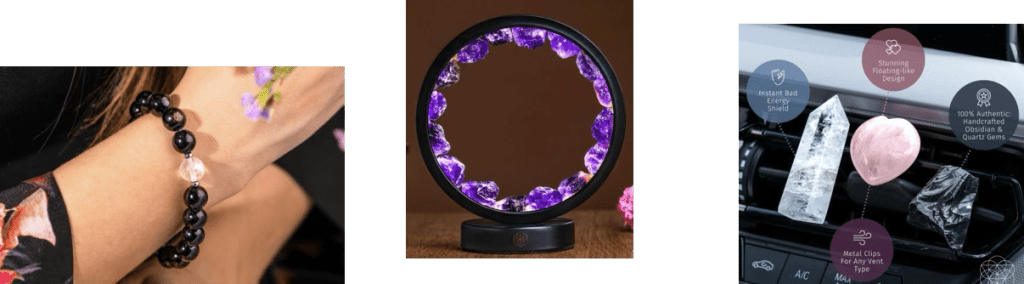
Discover the power of healing and mindfulness with Conscious Items, your trusted source for authentic crystal jewelry and home decor. From the Triple Protection Bracelet (now 51% off) to the Infinite Abundance Citrine Lamp (21% off), our best-selling collection harnesses the energy of genuine gemstones to promote peace, prosperity, and spiritual balance. Don’t miss out on deals like the Spiritual GPS Guardian Car Crystal Kit (42% off) or the I Am At Peace Amethyst Lamp (41% off) while they last! With over 500,000 satisfied customers and a 4.9/5 Trustpilot rating, every purchase is backed by a 30-day money-back guarantee and free insured shipping. Elevate your energy today—shop now and find your perfect crystal companion!
